
Methanol – Definition, Properties, Uses, and Tests
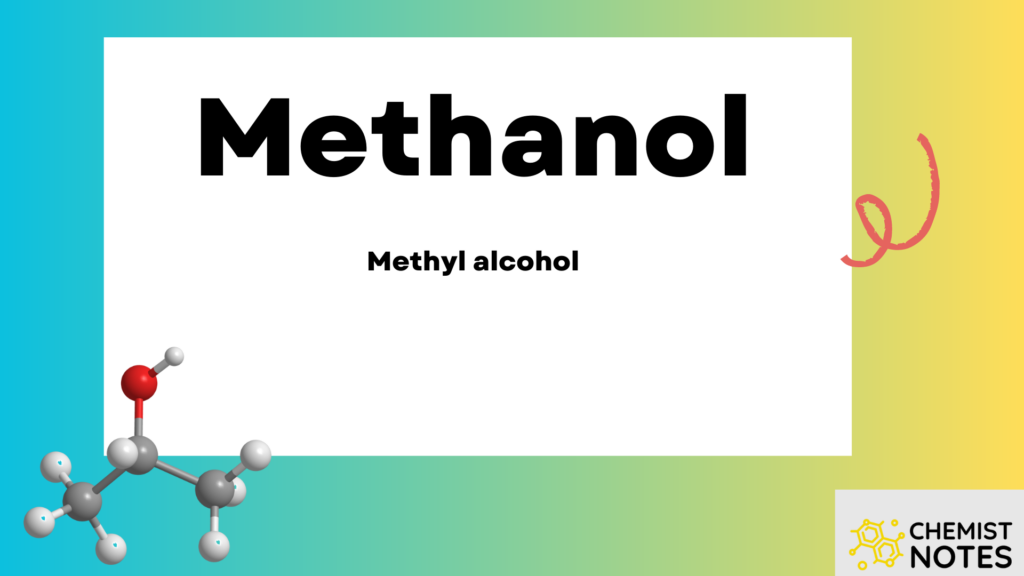
Methanol, also known as methyl alcohol, is a colorless watery organic liquid and the simplest aliphatic alcohol, with the chemical formula CH3OH. Although it is a toxic alcohol, it finds extensive industrial use industrially as a solvent, pesticide, and even as an alternative fuel source. It occurs naturally in the form of esters and is […]
Chloroform: Definition, Preparation, Properties, and 5 Important Uses
Chloroform is a colorless liquid with the chemical formula CHCl3 and a common organic solvent. This compound is obtained by replacing three hydrogen atoms of an alkane with three halogen atoms. It quickly evaporates into a gas and can harm the eyes, skin, liver, kidneys, and nervous system. Chloroform exposure can potentially lead to cancer. […]
Diethyl Ether – Definition, preparation, properties, and 6 important uses
Diethyl ether is an ether that has an oxygen atom bonded to two ethyl groups. It is a non-polar solvent which is the most important representative of the ether class. Preparation of Diethyl ether It can be prepared by any of the general methods of preparation of ethers. Laboratory Preparation It is prepared in the […]
Ethers – Definition, Preparation, Properties, and 5 Important Uses
Ethers are a class of compounds whose molecules have an oxygen atom bonded to two organic groups. The bivalent oxygen (-O-) is the functional group of ethers. Ethers are represented by the general formulae R-O-R, Ar-O-R, or Ar-O-Ar. Structurally, ethers may be considered to be derived from water by the replacement of both the hydrogens […]
Glycerol or glycerine – Detailed Explanation, Preparation, Metabolism, Properties, and 7 Uses
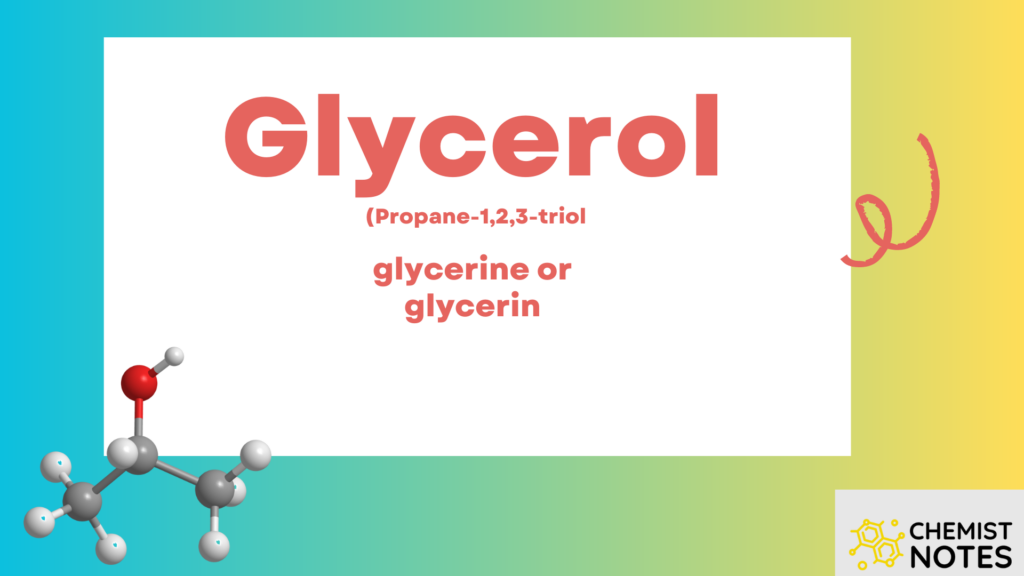
Glycerol or glycerine (Propane-1,2,3-triol) is a naturally occurring colorless, odorless, viscous liquid that is a sweet-tasting and non-toxic triol compound. It occurs in nature as a triester in oils and fats. Oil and fats are triesters of glycerol with carboxylic acids. The higher fatty acid may be such as palmitic acid (C15H31COOH), steric acid (C17H35COOH), or oleic […]
Acetone – Definition, Preparation, Properties, and 8 Important Uses
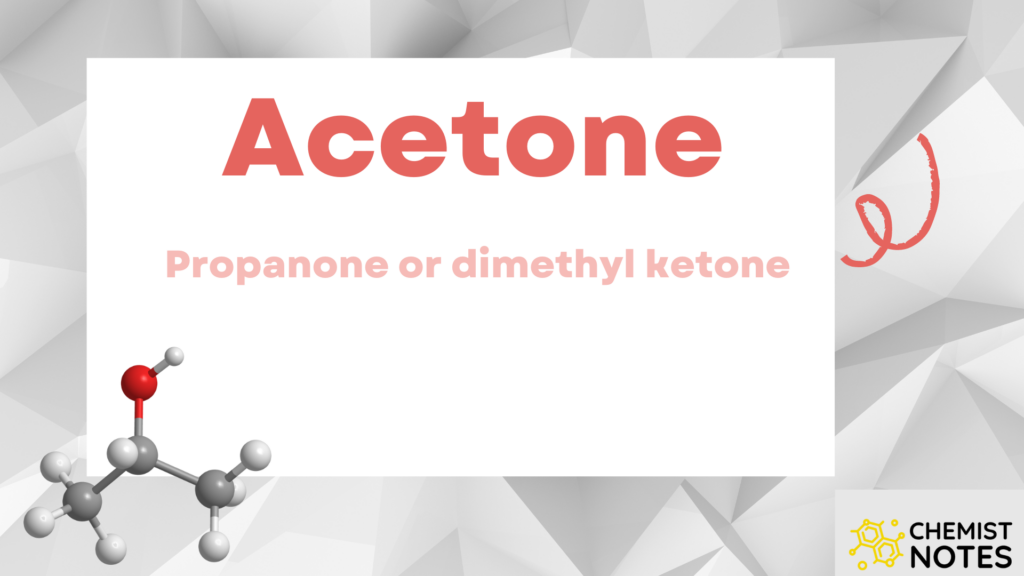
What is acetone? Acetone (or propanone or dimethyl ketone) is the simplest and most important aliphatic ketone with the chemical formula (CH3)2C=O. It is formed during the destructive distillation of wood and is found in the ‘Wood spirit’. It is highly soluble in a wide range of organic compounds. It is a colorless, extremely volatile, […]
Copper – Detailed explanation, Extraction, Properties, and 6 Uses
Copper is a chemical element denoted by the symbol Cu. The name Copper has been derived from the German word ‘Kupfer‘ but its symbol ‘Cu’ has been derived from its Latin name ‘Cuprum‘. Its atomic number is 29 and its atomic weight is 63.57 amu. The electronic configuration of Cu is 1s2, 2s22p6, 3s23p63d10, 4s1. […]
Coinage Metals (Cu, Ag, Au): Definition, Important Properties, and 4 uses
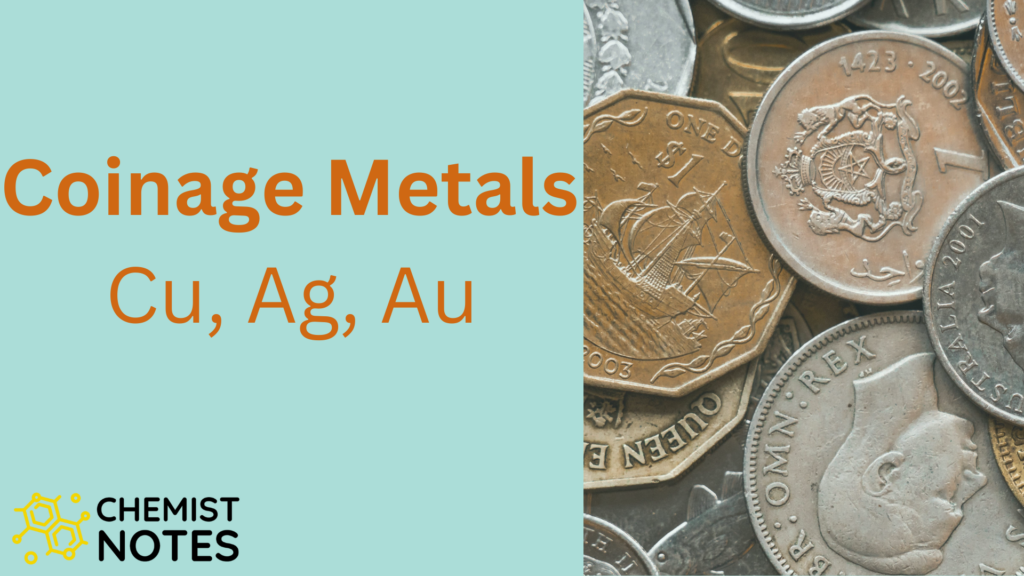
Coinage metals are the element of group IB (11) of the periodic table that constitutes three metallic elements, namely copper (29Cu). silver (47Ag), and gold (79Au). These metals are called coinage metals because of their use in making coins. Copper, silver, and gold have been known since ancient times and have been used for decorative […]
Solute Vs Solvent – Definition, Important Characteristics, and Examples
What is Solute? A solute is a substance that can be dissolved by a solvent to the formation of a solution. When it comes into contact with the appropriate type of solvent, it starts the dissolution process. During the dissolution process, the solvent separates the molecules of solute and disperses them uniformly. This generates a […]
Litmus Paper: Definition, Chemistry, Test, and 4 important Applications
What is Litmus paper? Litmus paper is a form of pH paper created by dying the paper with natural lichen dynes. By treating filter paper with any of the standard pH indicators, you can create paper test strips to determine the pH of an aqueous solution. Litmus was one of the first indicators used for […]
Hard Water – Definition, Types and 5 Effect of Hard water
Hard water and soft water is the two type of water contain in difference sources on the basis of dissolved impurities present in water and its behavior towards soap. Water that produce lather with soap easily and contain little or none of the dissolved salt ions like Cl–, SO4—, CO3—, HCO3– etc., of calcium (ca++) […]
Properties of Water (H2O)- Important Physical and Chemical properties
There are numerous properties of water including chemical and physical properties which are very essential for life on earth. What is water? Water is an important monoxide of hydrogen. It contains hydrogen and oxygen atoms in the ratio of 2:1; hence, its formula is H2O. It is an essential constituent of all living cells. Lavoisier […]