
Equal Channel Angular Pressing (ECAP): Process and 5 Reliable Advantages
Equal channel angular pressing (ECAP), also known as equal channel angular extrusion (ECAE), is a materials processing technique for the preparation of nanocrystalline and ultrafine-grained metals and alloys. Nanometer dimensions are generated by the application of an ultrahigh plastic strain on bulk materials or polycrystalline material. It is a top-down nanomaterials synthetic approach. Equal channel […]
Self Assembly: Synthesis of Nanoparticles- Easy Explanation
Self assembly of nanoparticles refers to the organization of molecules or particles into well-defined aggregates or structures without any external intervention. Moreover, Nanoparticle self assembly is a significant bottom-up synthetic methodology that involves the aggregation of colloidal nanoparticles into the final desired structure. This aggregation may occur chemically as a result of the complementary binding […]
Wet Chemical Synthesis: Precipitation, Reduction, and Ultrasonication- Easy Explanation
Wet chemical synthesis of nanoparticles is one of the most attractive, simplest, and versatile bottom-up methods. It is more advantages than the sol-gel process since alkoxides utilized in wet chemical synthesis are more versatile and economical than inorganic salt compounds used in the sol-gel technique. Nanoparticles are generated from a homogenous solution by one of […]
Spray Pyrolysis Method: Synthesis of Nanoparticles- Easy Explanation
Spray pyrolysis is one of the most commonly used aerosol processing bottom-up methods that involves the atomization of chemical precursors into aerosol droplets that are dispersed throughout a gas medium. On transporting aerosols in a hot reactor, the solution gets evaporated and forms ultrafine particles or thin films. Several particles, including multi-component compounds, have been […]
Chemical Vapor Deposition: Process, Advantages, and Disadvantages- Easy Explanation
Chemical vapor deposition (CVD), a bottom-up approach, is one of the most frequently used methods for the synthesis of thin films and nanoparticles. It is a process where one or more gaseous adsorption species react or decompose on a hot surface to form stable solid products. Chemical vapor deposition is more difficult than physical vapor […]
Physical Vapor Deposition Process: Synthesis of Nanoparticles- Easy Explanation
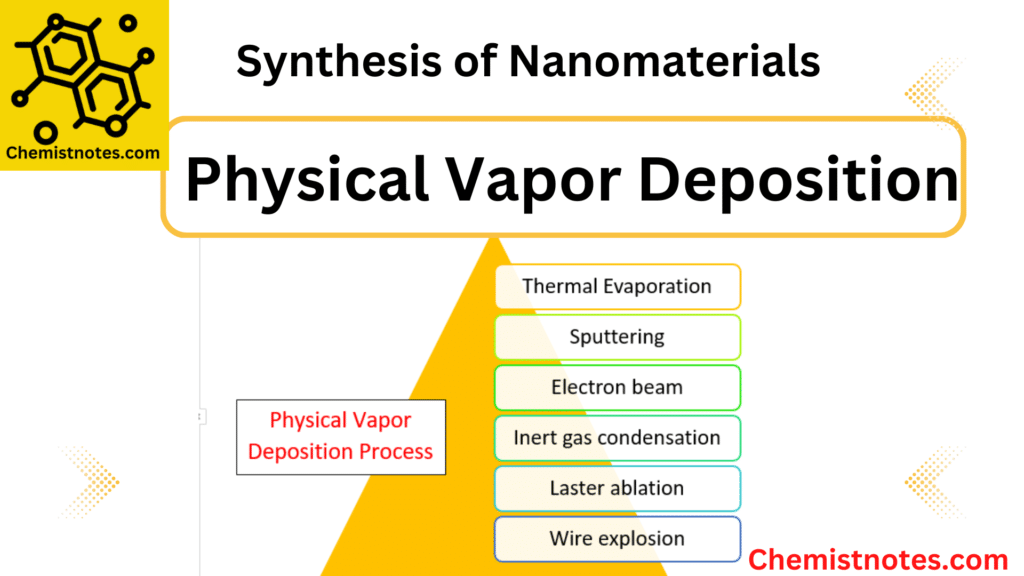
Physical vapor deposition (PVD) is a dynamic bottom-up-based synthesis technique capable of producing thin film materials at a nanometre scale (1-100nm). In physical vapor deposition, the material is heated above its melting point to generate vapors, which are then deposited on the target surface. It involves thegeneration of vapor phase either via evaporation, sputtering, laser […]
Sol Gel Method: Synthesis of Nanoparticles- Easy Explanation
Sol gel methods are based on the principle of transition of materials from the solution or sol phase to the gelatinous or gel phase. It is a process of oxide network formation via polycondensation reaction in the solution phase. Sol–gel process, one of the bottom-up approaches, has been in use for many years for producing […]
Synthesis of Nanomaterials: Bottom-up and Top-down Approach
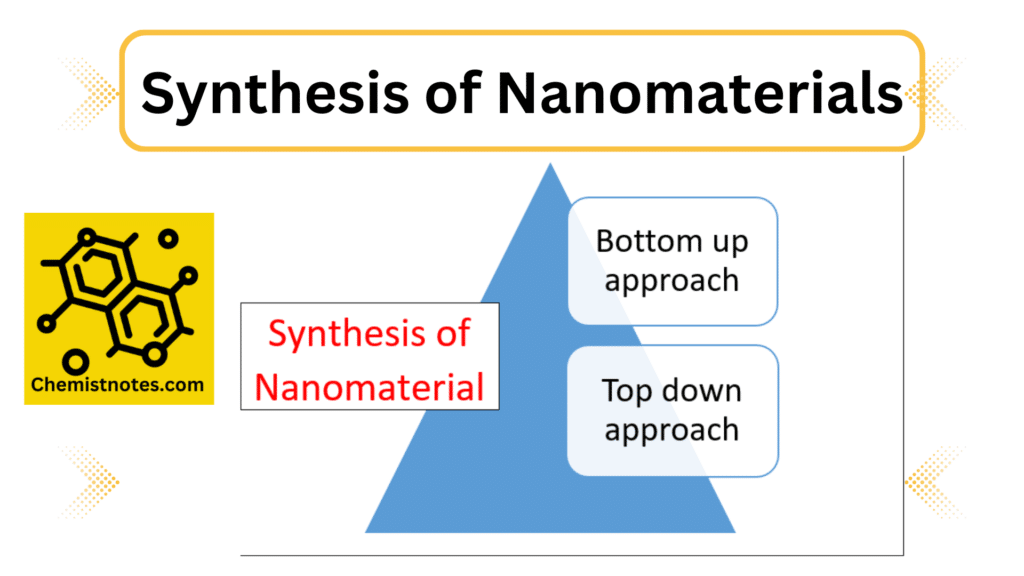
The synthesis of nanomaterials is the foremost step in nanotechnology research and development. Nanomaterials synthesis generally refers to the preparation of nanometer scale dimension materials. The method for synthesizing nanomaterials can vary depending on the type of nanomaterial, from a straightforward “mix and cook” method to a complex nanofabrication method incorporating clean room tools. Shape, […]
8 Unique Properties of Nanomaterials
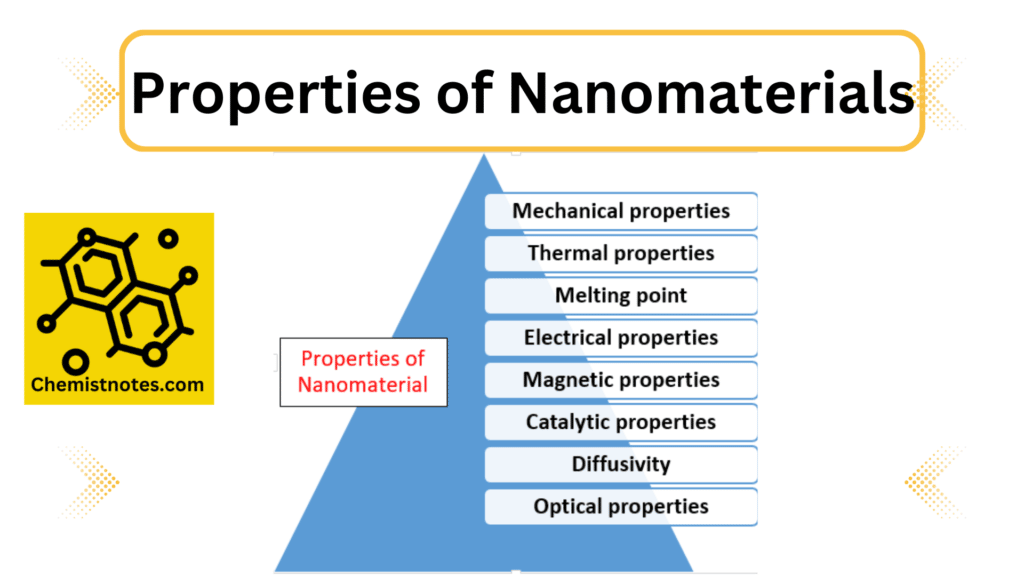
Some of the properties of nanomaterials include mechanical, thermal, electrical, melting, magnetic, catalytic, diffusive, and optical properties. Nanomaterials exhibit these unique properties as compared to their bulk counterpart. The reason behind nanomaterials exhibiting such specific properties is attributed to their size. Properties of Nanomaterials Some of the major properties of nanomaterials are: 1. Mechanical properties […]
X-ray Diffraction (XRD): Single crystal XRD and Powder XRD – 3 Reliable Applications
X-ray Diffraction (XRD) is a non-destructive analytical technique used to extensively characterize the crystal structure of solids, defects, and stresses. It provides chemical information for both phase analysis and elemental analysis and helps to find the geometry of molecules (nanomaterials) using X-rays. It also determines the orientation of a single crystal or grain, measures the […]
Small Angle X-Ray Scattering (SAXS): Principle, Instrumentation, and 7 Reliable Application
Small Angle X-Ray Scattering (SAXS) is one of the powerful non-destructive techniques for characterizing nanostructured material. X-ray scattering techniques provide information about the chemical makeup (composition), physical characteristics, and crystallographic structure of materials and thin films. It can be used for a wide range of nanomaterials from soft materials like polymers to hybrid materials like nanocomposite […]
Nanoindentation: Curve, Principle, Instrument, and 2 Reliable Application
Nanoindentation is one of the most common approaches used to measure the mechanical properties; hardness and elastic modulus of nanomaterials. It is a relatively new technique that observes the stress-strain behavior of nanomaterials when a nanoindenter is pressed against the materials under investigation. In nanomaterial research besides measuring surface makeup (topography), surface micro properties and […]