Octant rule: Definition, application with examples
The octant rule is one of the first and arguably the most effective of the several chirality sector rules that connect the cotton effect to organic stereochemistry. It establishes an absolute configuration or stereochemistry from the sign and intensity of the cotton effect and is unquestionably the most well-known and often-utilized rule. Define octant rule […]
Cationic Polymerization: An Easy Mechanism and Kinetics
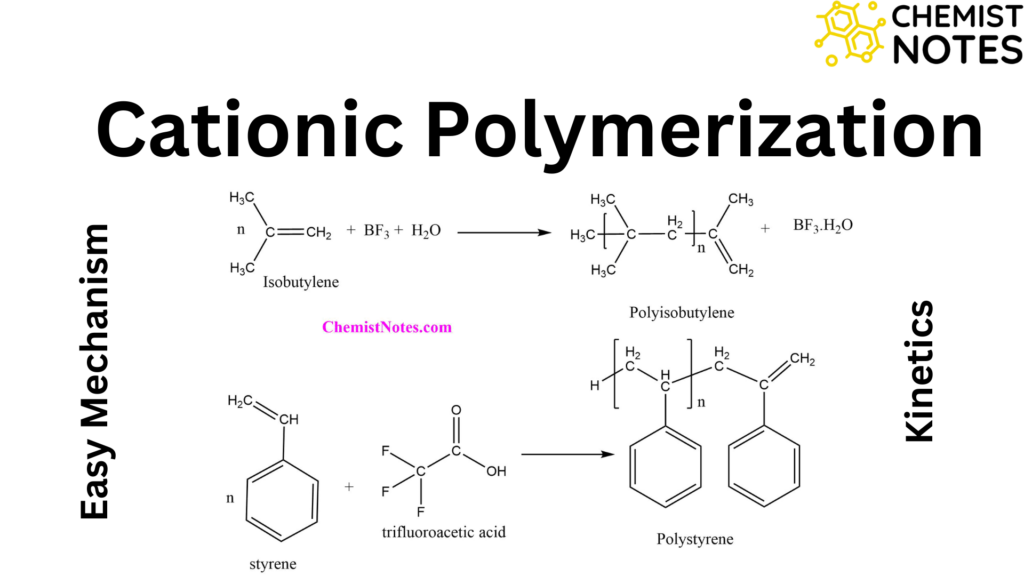
The polymerization which initiates by the formation of cation or positively charged species is called cationic polymerization. The active site of cationic polymerization is either carbonium ions or oxonium ions. Generally, the monomer of these polymerizations includes electron-donating substituents, in which the polarization of the double bond makes them sensitive to electrophilic attack. The solvents […]
Gilman Reagent: Preparation and reactions with easy mechanism
What is Gilman reagent? Gilman reagent is an organometallic reagent containing lithium (Li), copper (Cu), and two alkyl or aryl groups. The Gilman reagent is also known as lithium dialkylcuprate or lithium diarylcuprate and is represented by R2CuLi. The Gilman reagent reacts with alkyl bromides, chlorides, and iodides in ether or tetrahydrofuran (THF) as a […]
Magnetic equivalent protons: Easy Definition, examples, criteria
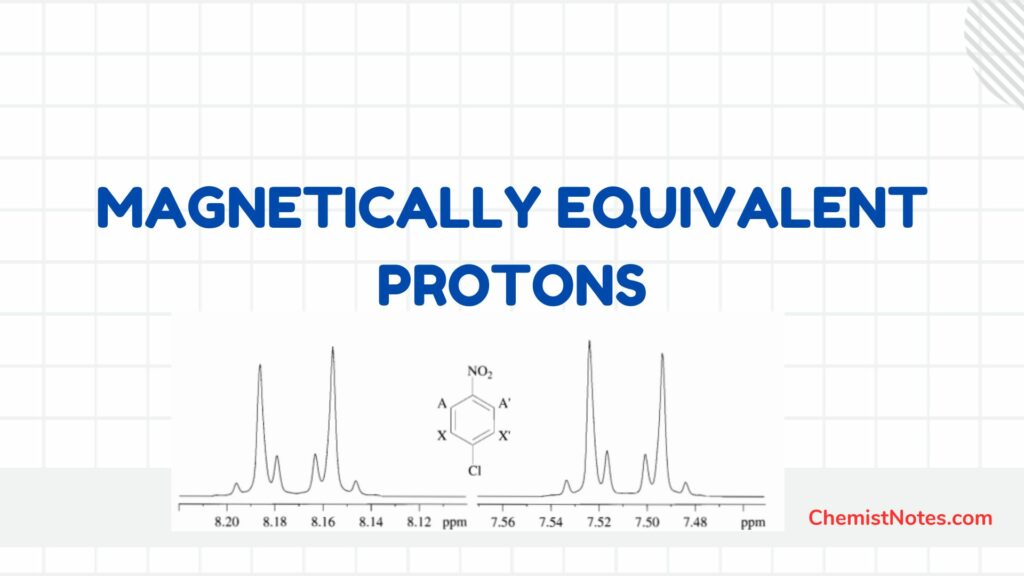
Magnetic equivalent protons plays a vital role in spectrum analysis and is often confused with the term chemical equivalence. It is often misinterpreted by considering it the same as chemical equivalence but in fact, all magnetically equivalent protons are chemically equivalent but all chemically equivalent protons are not magnetically equivalent. Let’s know what magnetic equivalent […]
IUPAC nomenclature of organic compounds: 6 Rules and examples
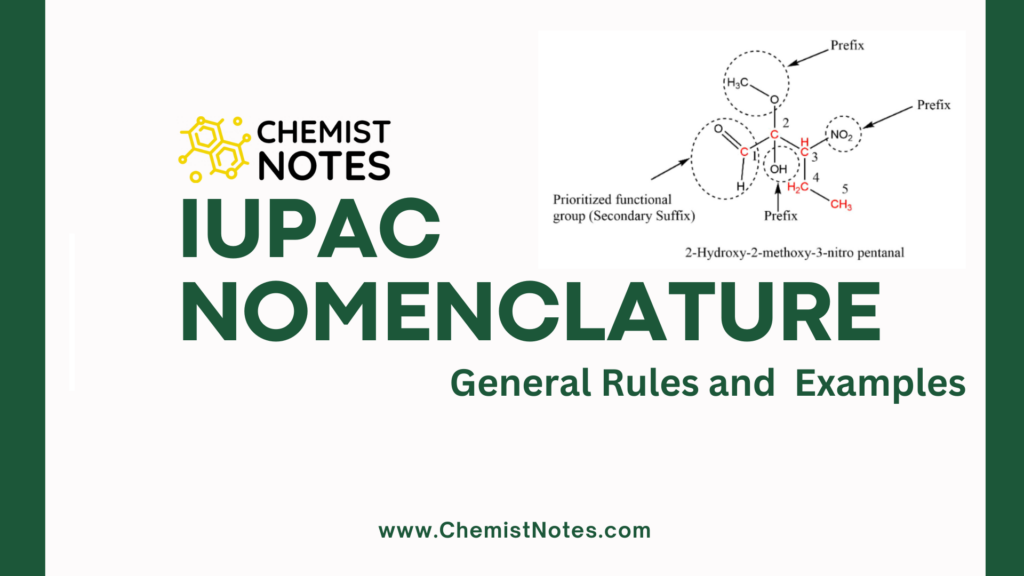
Organic chemists developed and utilized the IUPAC nomenclature system of organic compounds to solve the problems caused by common/arbitrary nomenclature systems. The comprehensive and systematic set of logical rules for the nomenclature of organic compounds was prepared by IUPAC (International Union of Pure and Applied Chemistry) in 1979 and was upgraded in 1993. IUPAC nomenclature […]
Gluconeogenesis: Easy definition, substrate, 8 steps, regulation
Gluconeogenesis is a term that describes the synthesis of glucose from the non-carbohydrate precursor (pyruvate). It means In gluconeogenesis, the formation of glucose takes place from fats and proteins instead of carbohydrates. Thus, the biosynthesis of glucose from non-precursor carbohydrates (sugar) is known as gluconeogenesis. The major precursors of gluconeogenesis include lactate, pyruvate, glucogenic amino […]
Quadrupole mass analyzer: Easy principle, working mechanism, advantages
Quadrupole mass analyzer A quadrupole mass analyzer, also known as a quadrupole mass filter, is one of the most widely used analyzers. Its foundational element is the quadrupole mass filter, which Nobel Prize winner Wolfgang Paul and colleague Helmut Steinwedel initially described in 1953. Why is it called a mass filter? A quadrupole mass analyzer […]
Citric acid cycle(TCA cycle): 8 steps, reactions, energetics, easy mnemonics
Citric acid cycle or TCA cycle or Kreb’s cycle The citric acid cycle (CAC), also known as the TCA (tricarboxylic acid) cycle or Kreb’s cycle, is a series of chemical reactions to release stored energy through the oxidation of acetyl-CoA derived from carbohydrates, fats, and proteins into CO2 and H2O. Kreb’s cycle basically involves the […]
Time of flight mass analyzer(TOF): Easy working principle, advantages and application
The Time of Flight mass analyzer (TOF) is one of the most widely used mass analyzers in the mass spectrometric field. Similar to other mass analyzers, its main function is to separate charged particles formed by the ionization process. In this blog, you will learn about the development, principle, working mechanism, advantages, limitations, and applications […]
Glyoxylate Cycle: Easy Explanation- 6 Steps
The glyoxylate cycle, a modified form of the tricarboxylic acid cycle, is a metabolic pathway that takes place in plants, protists, bacteria, and fungi. The glyoxylate cycle is primarily focused on the enzymatic conversion of acetyl-CoA into succinate, which serves as a precursor for the biosynthesis of carbohydrates. In context to the plant cells, it occurs […]
Glycolysis Cycle: Definition, 10 Steps, Reactions
The metabolic pathway which converts glucose (C6H12O6) into pyruvic acid (CH3COCOOH) is known as glycolysis cycle. The word glycolysis is derived from the Greek word ‘Glykys’ meaning ‘sweet’ and ‘lysis’ meaning ‘splitting’. So, in glycolysis, a molecule of glucose is degraded in a series of enzyme-catalyzed reactions to yield two molecules of pyruvate. Glycolysis Cycle […]
Plasmid: Definition, Structure, Classification, and 5 Reliable Function
Plasmids are smaller circular segments of DNA molecules, present in the cytoplasm of bacteria, archaea, and some microorganisms. Plasmids undergo self-replication and are entirely different from the chromosomal DNA of their host organism. Plasmids, also called extra chromosomal DNA have a small number of genes that consult with resistance to toxin and antibiotic environments. Chromosomal […]